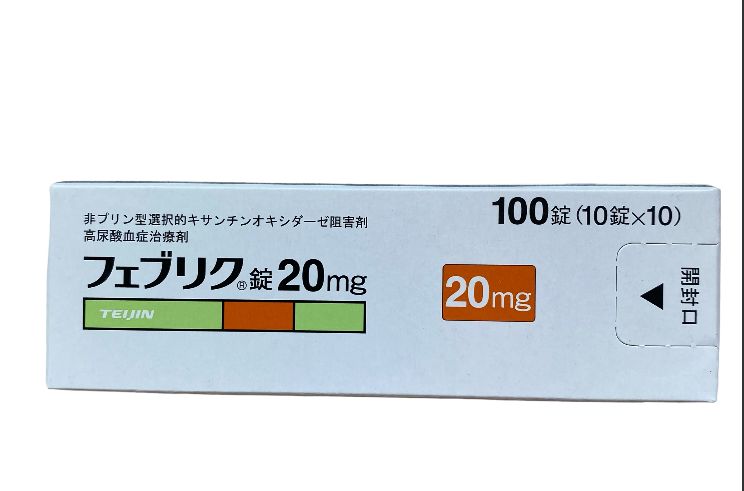
Febuxostat (Feburik) 20 mg 100 tablets.
$150
Gout
A drug for the treatment of gout
In stock
1
Save this product for later
Febuxostat (Feburik) 20 mg 100 tablets.
Product Details
«Feburik» is an antigout drug based on febuxostat. Before use, be sure to consult your doctor.
Indications
The drug is intended for the treatment of chronic hyperuricemia in adults with diseases accompanied by the deposition of urate crystals, including gouty arthritis or tophi. Feburik is also used for the treatment and prevention of hyperuricemia in adults during cytostatic therapy for hematological malignancies with a moderate or high risk of tumor lysis syndrome (only for the 120 mg dosage).
Contraindications
It is not recommended to take Feburik if you have:
- hypersensitivity to febuxostat or any of the excipients;
- rare hereditary diseases associated with galactose intolerance, lactase deficiency, or glucose/galactose malabsorption;
- use of azathioprine and mercaptopurine;
- pregnancy and lactation;
- age under 18.
Precautions:
- Start treatment only after the acute gout attack has been controlled.
- To prevent attacks, take NSAIDs or colchicine for at least six months.
- Monitor liver function at the beginning of therapy and if symptoms occur.
- Use caution when driving and performing tasks that require attention and reaction.
Method of administration and doses
The recommended initial dose is 80 mg (40 mg once daily). If the uric acid concentration is above 6 mg/dL (357 μmol/L), the dose can be increased to 80 mg after 2-4 weeks.
Features for different patient groups:
- Elderly patients: no dose adjustment is required.
- Patients with mild hepatic impairment: the initial dose is 80 mg. The experience of use in moderate hepatic insufficiency is limited.
- Patients with severe renal insufficiency: the efficacy and safety of the drug have not been studied.
The duration of treatment is selected individually, the goal is to reduce and maintain the uric acid level below 6 mg/dl (357 μmol/L).
Side effects
Among the possible side effects:
- Nervous system: headache, dizziness, paresthesia, drowsiness, taste disorders.
- Respiratory system: cough, bronchitis.
- Blood: leukopenia, anemia, thrombocytopenia.
- Cardiovascular system: angina pectoris, arrhythmias, hypertension.
- Digestive system: nausea, diarrhea.
- Musculoskeletal system: arthralgia, myalgia.
- Skin: dermatitis, urticaria, alopecia.
- Urinary system: hematuria, polyuria, renal failure, nephrolithiasis.
- Reproductive system: erectile dysfunction, gynecomastia, mastalgia.
- Allergic reactions.
Customer reviews
Reviews only from verified customers
No reviews yet. You can buy this product and be the first to leave a review.
Display prices in:USD