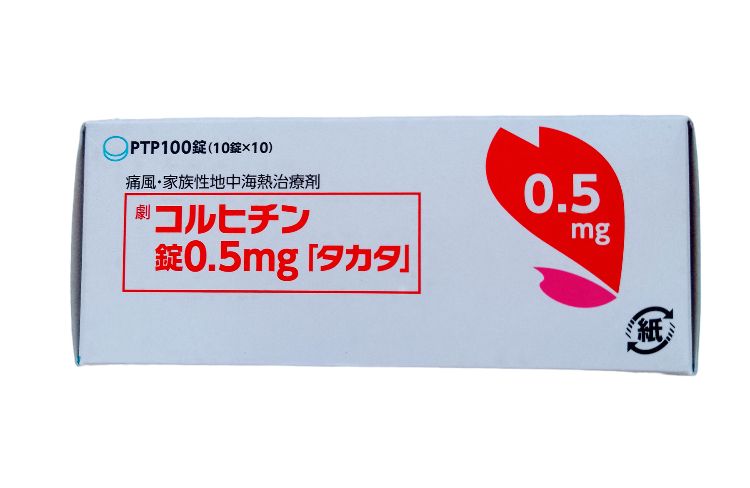
COLCHICIN 0.5 mg (Taka-Ta), 100 tablets.
$52
Gout
Treatment of gout
In stock
1
Save this product for later
COLCHICIN 0.5 mg (Taka-Ta), 100 tablets.
Product Details
Colchicine is a drug for the treatment of gout, which affects the processes of uric acid metabolism. It reduces the migration of leukocytes to the inflamed area and inhibits the phagocytosis of uric acid microcrystals. Colchicine also blocks cell division at the anaphase and metaphase stages and prevents the release of enzymes from neutrophils. It reduces the formation of amyloid fibers, which helps to prevent the development of amyloidosis.
Colchicine effectively relieves acute attacks of gout. In the first 12 hours of therapy, the condition improves significantly in 75% of patients. However, 80% of patients may experience gastrointestinal side effects before or during improvement.
Daily administration of 1-2 mg of colchicine reduces the risk of recurrent attacks in 75% of patients with gout. Colchicine also helps prevent acute attacks in patients with familial Mediterranean fever by reducing the activity of dopamine beta-hydroxylase. In patients with primary AL-amyloidosis, the drug increases life expectancy. In systemic scleroderma, colchicine softens the skin and reduces its dryness.
---
Form of release
0.5 mg coated tablets.
---
Indications for use
- Acute attacks of gout.
- Familial Mediterranean fever (periodic disease).
---
Contraindications
- Allergy to colchicine or excipients.
- Lactose intolerance, fructose intolerance or lactase deficiency.
- Acute heart failure, severe liver or kidney failure.
- Severe gastrointestinal disorders.
- Bone marrow suppression.
- Pregnancy and breastfeeding.
- Age under 18.
---
Method of administration and doses
The drug is taken orally. The tablet can be swallowed whole or divided in half along the risk to obtain a dose of 0.5 mg.
For acute gout attack, 1 mg (1 tablet) is prescribed, followed by 0.5-1.5 mg every 1-2 hours until the pain subsides. The maximum daily dose is 8 mg. Repeated administration is possible no earlier than 3 days.
To prevent gout attacks in the first months of treatment with uricosuric agents, 0.5-1.5 mg of colchicine is taken daily or every other day for 3 months.
---
Side effects
Gastrointestinal side effects may occur in 80% of patients before or during improvement.
Customer reviews
Reviews only from verified customers
No reviews yet. You can buy this product and be the first to leave a review.
Display prices in:USD