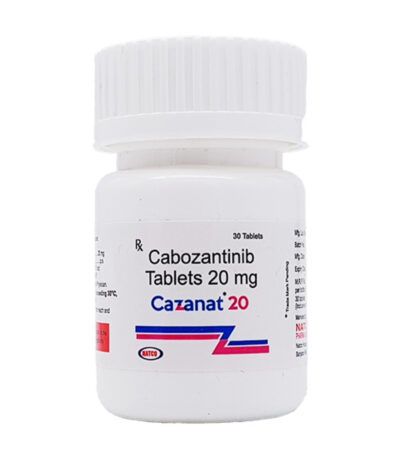
Cabozantinib Cazanat 20 / 40 / 60 mg, 30 Tablets.
$46
Oncology
Price
Oncology treatment
In stock
1
Save this product for later
Cabozantinib Cazanat 20 / 40 / 60 mg, 30 Tablets.
Product Details
Cabozantinib is an anti-cancer drug that blocks proteins that promote tumor growth, the formation of new blood vessels, bone remodeling, drug resistance, and the spread of metastases.
How the drug works
Cabozantinib inhibits the activity of several receptor tyrosine kinases, including:
- MET (hepatocyte growth factor);
- VEGF (vascular endothelial growth factor);
- GAS6 (AXL);
- RET;
- ROS1;
- TYR03;
- MER;
- KIT (stem cell growth factor receptor);
- TRKB;
- FLT3 (Fms-like tyrosine kinase-3);
- TIE-2.
These proteins play an important role in tumor growth and blood supply. The drug slows down their activity, which helps to stop tumor development.
When to use
Cabozantinib is used to treat adults (over 18 years of age) with various types of cancer:
- Renal cell carcinoma:
- as a single treatment for advanced cancer in patients with poor prognosis who have not received previous therapy;
- after treatment with anti-angiogenic drugs;
- in combination with nivolumab as the first treatment for advanced cancer.
- Liver cell carcinoma: as a single agent after treatment with sorafenib.
- Differentiated thyroid cancer: for the treatment of locally advanced or metastatic cancer that is not responsive to radioiodine therapy or has progressed after systemic therapy.
Dosage Forms
Cabozantinib is available as film-coated tablets in doses of 20 mg, 40 mg, and 60 mg.
Dosage and administration
The standard dose is 60 mg once a day. When combined with nivolumab for kidney cancer, the dose is reduced to 40 mg.
Treatment is continued until it is beneficial or until serious side effects occur.
Contraindications
The drug is not prescribed in:
- Allergy to cabozantinib or its components;
- Severe renal or hepatic insufficiency;
- pregnancy and breastfeeding;
- age under 18.
Special instructions
Cabozantinib should be used with caution in the following cases:
- intestinal diseases (Crohn's disease, ulcerative colitis);
- tumor infiltration into the gastrointestinal tract;
- complications after surgery;
- a history of thromboembolism or a high risk of its occurrence;
- arterial hypertension;
- concomitant use of potent CYP3A4 inhibitors, P-glycoprotein substrates, and MRP2 substrates;
- QT interval prolongation on the ECG or use of antiarrhythmic drugs;
- heart diseases and disorders of water and electrolyte balance;
- mild to moderate hepatic or renal impairment.
Side effects
Patients taking cabozantinib may experience:
- anemia, decreased levels of platelets, neutrophils, and lymphocytes;
- hypothyroidism;
- poor appetite, deficiency of magnesium, potassium, calcium, sodium, protein, phosphorus, and glucose in the blood;
- abscesses;
- proteinuria (protein in the urine);
- palmoplantar erythrodysesthesia syndrome (numbness and redness of the palms and soles), skin rash, itching, hair loss, dry skin, acne, and hair color changes;
- cramps and joint pain;
- weakness, fatigue, inflammation of the mucous membranes, and swelling;
- weight loss and increased levels of ALT and AST enzymes in the blood.
Customer reviews
Reviews only from verified customers
No reviews yet. You can buy this product and be the first to leave a review.
Display prices in:USD