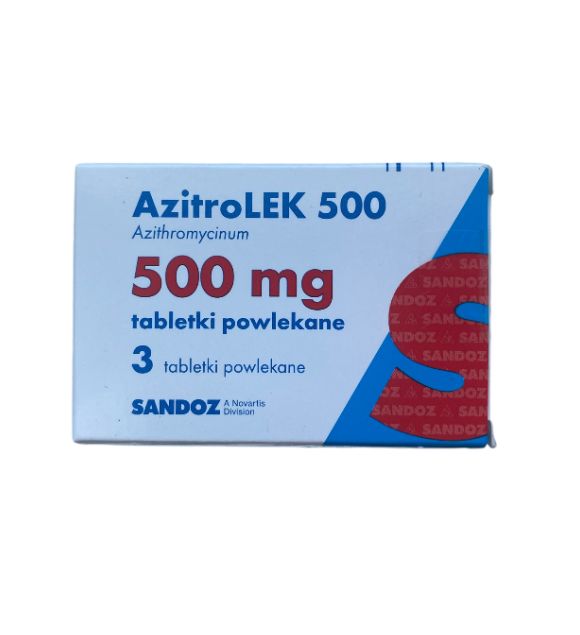
Azitrolek (asimicin) 500 mg, 3 tablets
$36
The antibiotic
Broad-spectrum antibiotic
In stock
1
Save this product for later
Azitrolek (asimicin) 500 mg, 3 tablets
Product Details
Azimicin is a broad-spectrum antibiotic containing azithromycin. It belongs to the macrolide-azalide group. It is used to treat infectious diseases caused by sensitive microorganisms.
Indications for use
- Infections of the respiratory tract and ENT organs: tonsillitis, sinusitis, pharyngitis, and otitis media.
- Lower respiratory tract infections: acute bronchitis, exacerbation of chronic bronchitis, pneumonia (including atypical pneumonia).
- Skin and soft tissue infections: moderate acne, erysipelas, impetigo, dermatoses.
- Uncomplicated genitourinary tract infections (chlamydia).
- Early stage of Lyme disease (migratory erythema).
Contraindications
- Allergy to azithromycin, erythromycin, macrolides, or ketolides.
- Allergy to the drug's excipients.
- Severe liver failure.
- Severe renal impairment (CrCl < 40 ml/min).
- Concurrent use with ergotamine and dihydroergotamine.
- Age under 18 years (for intravenous administration).
Administration and dosage
The drug is taken orally 1 hour before a meal or 2 hours after a meal. The dosage depends on the disease and age.
For adults:
- Respiratory and skin infections: 0.5 g once a day for 3 days (1.5 g total).
- Skin and soft tissue infections: 1 g on the first day, then 0.5 g for 5 days (3 g total).
- Urethritis or cervicitis: 1 g once.
- Lyme disease: 1 g on the first day, 0.5 g for 5 days (3 g total).
- Gastric ulcer: 1 g for 3 days as part of combination therapy.
For children over 12 years of age:
- General infections: 10 mg/kg per day for 3 days or 10 mg/kg on the first day, then 5-10 mg/kg for 4 days (30 mg/kg total).
- Lyme disease: 20 mg/kg on the first day, then 10 mg/kg for 5 days.
Side effects
Adverse reactions are possible:
- Digestive system: nausea, diarrhea, abdominal pain, vomiting, flatulence, increased liver enzymes. In children, constipation, lack of appetite, gastritis.
- Cardiovascular system: palpitations, chest pain (very rare).
- Nervous system: dizziness, headache, drowsiness, anxiety, insomnia (rarely).
- Genitourinary system: vaginal candidiasis, nephritis (less than 1%).
- Allergic reactions: rash, itching, Quincke's edema (rarely).
Customer reviews
Reviews only from verified customers
No reviews yet. You can buy this product and be the first to leave a review.
Display prices in:USD