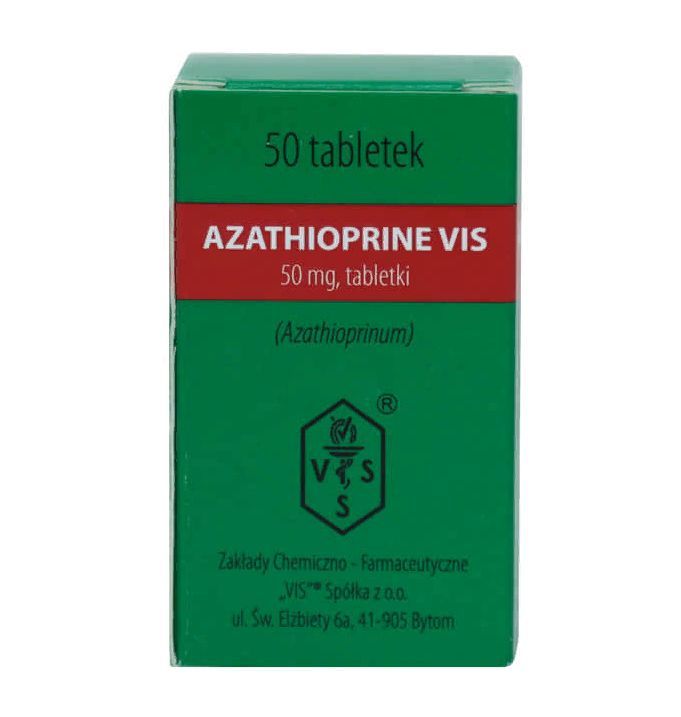
Azathioprine 50 mg 50 tablets
$72
Oncology
In stock
1
Save this product for later
Azathioprine 50 mg 50 tablets
Product Details
Azathioprine
Azathioprine is an immunosuppressant that suppresses cellular immunity. It is available in tablet or capsule form, usually in packs of 50. It is available with a doctor's prescription.
Composition and form of release
Tablets
- Active ingredient: azathioprine 50 mg.
- Excipients: gelatin, potato starch, lactose monohydrate, crospovidone, calcium stearate.
- Description: light yellow or light yellow with a greenish tint, round, flat, with a bevel.
Capsules
- Active ingredient: azathioprine 50 mg.
- Excipients: lactose monohydrate, corn starch, calcium stearate, crospovidone, gelatin.
- Description: hard gelatin capsules No. 2, white in color with a yellow cap. Inside, there is a mixture of powder and granules of light yellow or light yellow with a greenish tint.
Pharmacological action
Azathioprine belongs to the immunosuppressants and antimetabolites. It blocks cell division and tissue proliferation, especially delayed-type hypersensitivity reactions and cellular cytotoxicity, by suppressing tissue incompatibility. Antibody synthesis is suppressed to a lesser extent.
Indications for use
- Prevention of transplant rejection (as part of combined therapy).
- Rheumatoid arthritis.
- Chronic active hepatitis.
- Systemic lupus erythematosus.
- Nonspecific ulcerative colitis.
- Dermatomyositis.
- Myasthenia gravis.
- Granulomatosis with polyangiitis.
- Pemphigus vulgaris.
- Autoimmune glomerulonephritis.
- Idiopathic thrombocytopenic purpura.
- Psoriasis.
The drug can also be used for other autoimmune and inflammatory diseases as prescribed by a doctor.
Contraindications
- Hypersensitivity to azathioprine or its components, as well as to 6-mercaptopurine.
- Hematopoietic suppression (hypoplastic or aplastic anemia, leukopenia, lymphopenia, thrombocytopenia).
- Pregnancy and lactation.
- Lactose intolerance, lactase deficiency, or glucose-galactose malabsorption.
- Children under 3 years of age.
Side effects
- Hematopoiesis: leukopenia, thrombocytopenia, anemia, secondary infections, megaloblastic erythropoiesis, macrocytosis, and, in rare cases, hemolytic anemia.
- Digestive system: nausea, vomiting, anorexia, cholestatic hepatitis. Transplant recipients may experience pancreatitis, gastrointestinal erosions and ulcers, bleeding, intestinal necrosis, and perforation.
- Allergies: skin rash, arthralgia, myalgia, and drug fever.
- Other: rare cases of acute renal failure, pulmonary diseases, and meningeal reactions.
Customer reviews
Reviews only from verified customers
No reviews yet. You can buy this product and be the first to leave a review.
Display prices in:USD